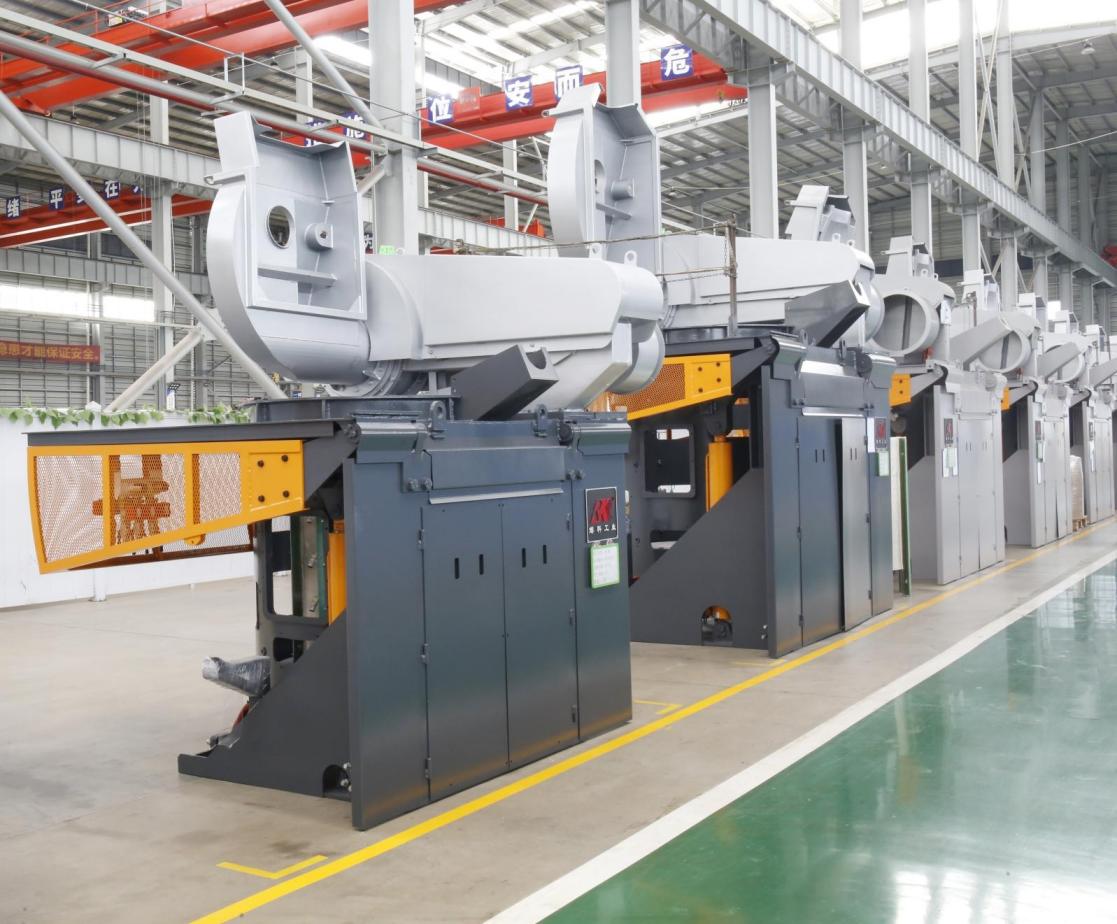


How to Choose the Right Induction Melting Furnace for Your Foundry
How to Choose the Right Induction Melting Furnace for Your Foundry
Choosing the right induction melting furnace is an important decision for any foundry.
The furnace directly affects your production capacity, energy consumption, melting efficiency, metal quality, and long-term operating costs.
However, selecting an induction melting furnace is not simply about choosing a larger capacity or higher power machine.
The right furnace depends on many factors, including:
- The type of metal you melt
- Required production capacity
- Melting speed
- Energy efficiency
- Power supply configuration
- Factory layout
- Automation requirements
- Safety standards
In this guide, we will explain the key factors you should consider when choosing an induction melting furnace for your foundry.
1. Determine What Metal You Need to Melt
The first step is identifying the type of metal your foundry processes.
Different metals have different melting temperatures, chemical characteristics, and operating requirements.
Common applications include:
Cast Iron Melting
Induction furnaces are widely used in cast iron foundries because they provide:
- Fast melting speed
- Stable temperature control
- Good chemical composition control
- Flexible production operation
Steel Melting
Steel melting requires higher operating temperatures and suitable refractory materials.
The furnace configuration should be selected according to:
- Steel grade
- Melting temperature
- Production requirements
- Alloying process
Copper and Aluminum Melting
Copper and aluminum have different thermal and electrical characteristics, so furnace design parameters need to be adjusted accordingly.
Before selecting a furnace, always confirm:
What material will be melted?
This is the foundation for choosing the correct furnace configuration.
2. Choose the Right Furnace Capacity
One of the most common mistakes when purchasing an induction furnace is focusing only on furnace capacity.
A furnace capacity refers to the maximum amount of metal held in the furnace at one time.
Common industrial capacities include:
- 500 kg
- 1 ton
- 2 tons
- 3 tons
- 5 tons
- 10 tons
- Larger customized solutions
However:
Furnace capacity is not the same as hourly production output.
The actual production capacity depends on:
- Melting time
- Power level
- Charging method
- Metal type
- Operating efficiency
- Tapping and pouring time
For example, two foundries using the same furnace capacity may have different production outputs because their operating conditions are different.
A professional furnace manufacturer should calculate the complete production requirement before recommending a model.
3. Consider the Required Melting Power
The power supply determines how quickly electrical energy can be converted into heat.
Higher power generally means faster melting speed, but the correct power selection depends on the complete production requirement.
Important factors include:
- Furnace size
- Metal type
- Required melting rate
- Working schedule
- Available electrical capacity
An oversized power supply may increase investment costs, while insufficient power may reduce production efficiency.
The goal is to find the best balance between:
- Melting speed
- Energy consumption
- Investment cost
- Production requirements
4. Select the Appropriate Frequency
Induction furnaces usually operate at different frequencies depending on their application.
For many industrial foundry applications, medium-frequency induction furnaces are widely used because they provide a good balance between:
- Heating efficiency
- Metal penetration depth
- Electromagnetic stirring
- Production flexibility
Frequency selection affects:
- Heating characteristics
- Furnace performance
- Melting efficiency
- Metal stirring effect
The right frequency should be selected according to:
- Metal type
- Furnace capacity
- Production process
5. Evaluate Energy Efficiency
Energy consumption is one of the biggest concerns for modern foundries.
When comparing different induction melting furnaces, consider:
- Power efficiency
- Coil design
- Power supply technology
- Cooling system performance
- Furnace operating condition
A well-designed induction melting system can help reduce unnecessary energy loss and improve overall production efficiency.
However, energy consumption is affected by many factors, including:
- Raw material condition
- Charging method
- Operating habits
- Melting temperature
- Production management
Therefore, energy efficiency should always be evaluated as part of the complete system.
6. Consider Furnace Automation Requirements
Modern foundries are increasingly moving toward automation.
A basic melting system may include:
- Induction furnace
- Power supply
- Cooling system
- Control system
However, a complete automated foundry solution may include:
Automatic Batching
↓
Automatic Feeding
↓
Induction Melting
↓
Molten Iron Transfer
↓
Automatic Pouring
Automation can provide advantages such as:
- Reduced labor requirements
- Improved production consistency
- Better process control
- Improved workplace safety
- Higher production efficiency
The automation level should be selected according to:
- Production volume
- Labor availability
- Factory layout
- Investment plan
7. Check Safety Features
Safety is one of the most important considerations when choosing an induction melting furnace.
Important safety systems include:
Furnace Leakage Detection
A leakage monitoring system helps detect abnormal conditions and improves operational safety.
Cooling System Protection
The induction coil and electrical components require reliable cooling.
Electrical Protection
The system should include proper protection against:
- Overcurrent
- Overvoltage
- Abnormal operation
Temperature Monitoring
Accurate temperature monitoring helps maintain stable melting conditions.
A reliable manufacturer should provide a complete safety system rather than only focusing on melting performance.
8. Choose a Reliable Induction Furnace Manufacturer
The manufacturer you choose will influence:
- Equipment quality
- Installation support
- Spare parts availability
- Technical service
- Long-term operation
When evaluating an induction furnace manufacturer, consider:
Engineering Capability
Can the supplier provide a customized solution based on your production requirements?
Manufacturing Experience
Does the supplier have experience with similar projects?
Quality Control
Does the manufacturer test equipment before shipment?
After-Sales Support
Can they provide installation guidance, training, and technical support?
A professional manufacturer should understand your production process, not just sell a standard machine.
9. Why Choose Rongke for Your Induction Melting Solution?
Rongke provides customized induction melting and foundry automation solutions for industrial customers.
Our solutions can include:
- Medium frequency induction melting furnace
- Power supply system
- Automatic batching and feeding system
- Molten iron transfer system
- Automatic pouring system
- Cooling system
- Dust removal system
Instead of providing only a single furnace, Rongke focuses on developing a complete solution based on:
- Metal type
- Production capacity
- Factory conditions
- Automation requirements
This helps customers achieve safer, more efficient, and more reliable melting operations.
Conclusion
Choosing the right induction melting furnace requires careful evaluation of many factors.
The key considerations include:
- Metal type
- Furnace capacity
- Power requirements
- Frequency selection
- Energy efficiency
- Automation level
- Safety systems
- Manufacturer capability
A properly selected induction furnace can improve production efficiency, reduce operating costs, and support long-term foundry development.
If you are planning a new melting line or upgrading your existing foundry equipment, Rongke’s engineering team can help design a customized induction melting solution.
Contact Rongke today to discuss your foundry requirements.