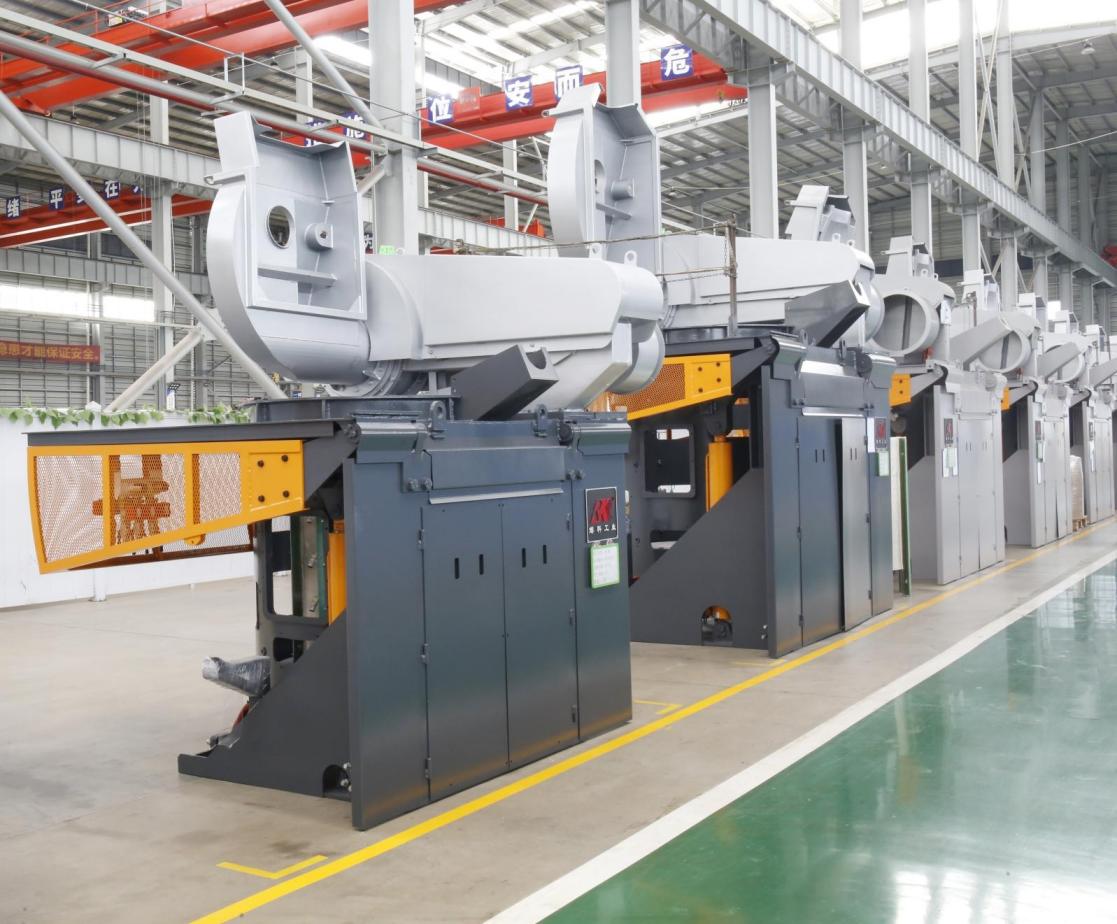

How Much Does an Induction Melting Furnace Cost?
How Much Does an Induction Melting Furnace Cost?
If you are planning to purchase an induction melting furnace, one of the first questions you may ask is:
How much does an induction melting furnace cost?
The answer is not a single fixed number.
The price of an induction melting furnace depends on many factors, including furnace capacity, power supply, metal type, cooling system, automation level, safety configuration, and customized requirements.
For this reason, comparing furnaces only by their quoted price can be misleading.
A better approach is to understand what determines the total cost of an induction melting system and which configuration is suitable for your production requirements.
In this guide, we explain the main factors that affect induction furnace cost and what buyers should consider when requesting a quotation from a manufacturer.
1. What Determines the Cost of an Induction Melting Furnace?
An induction melting furnace is not simply one machine.
A complete melting system may include:
- Induction furnace body
- Induction coil
- Medium-frequency power supply
- Capacitor system
- Electrical control cabinet
- Cooling system
- Hydraulic tilting system
- Temperature measurement system
- Furnace leakage detection
- Charging and feeding equipment
- Molten metal transfer equipment
- Automatic pouring system
- Dust and fume extraction equipment
The final price depends on which components and functions are required for your production line.
Therefore, two furnaces with similar capacities can have significantly different prices.
2. Furnace Capacity Has a Major Impact on Price
Furnace capacity is one of the most important factors affecting the investment cost.
Industrial induction melting furnaces can be designed for different capacities, from relatively small systems to large-scale industrial melting solutions.
For example, a customer may require:
- 500 kg
- 1 ton
- 2 tons
- 3 tons
- 5 tons
- 10 tons
- Or a larger customized solution
Generally, a larger furnace requires a larger and more powerful system.
However, you should not simply choose the largest furnace you can afford.
The correct capacity should be determined according to:
Required batch size + melting rate + production schedule + downstream casting requirements
An oversized furnace may increase the initial investment without providing a corresponding production benefit.
3. Power Supply Affects the Total Investment
The power supply is another major component of an induction melting system.
The required power depends on:
- Furnace capacity
- Metal type
- Required melting speed
- Production target
- Operating schedule
For example, a customer who needs a high melting rate may require a higher-power system than a customer with a lower production target.
The power supply technology also affects the system configuration.
Medium-frequency induction melting systems may use different power supply technologies depending on the application and system design.
When comparing quotations, do not compare only the furnace body.
Make sure you compare:
Furnace + Power Supply + Control System + Cooling System + Other Required Equipment
4. The Metal You Melt Matters
Different metals require different melting conditions.
Common induction melting applications include:
- Cast iron
- Carbon steel
- Stainless steel
- Copper
- Aluminum
- Various alloys
Different materials have different:
- Melting temperatures
- Electrical characteristics
- Refractory requirements
- Melting processes
- Temperature control requirements
For example, a furnace designed for a specific cast iron application may have different requirements from a system designed for high-temperature steel melting.
When requesting a quotation, always tell the manufacturer what metal you intend to melt.
5. Automation Can Increase the Initial Investment
A basic induction melting system may require operators to manually charge materials and transfer molten metal.
A more advanced foundry may require an integrated automated production line.
For example:
Automatic Batching
↓
Automatic Feeding
↓
Induction Melting
↓
Molten Metal Transfer
↓
Automatic Pouring
An automated system generally requires additional equipment, sensors, control systems, mechanical components, and software.
This increases the initial investment.
However, automation can also provide long-term benefits, including:
- Reduced manual labor
- Improved production consistency
- Better process control
- Improved workplace safety
- Higher production efficiency
Therefore, automation should be evaluated based on total production economics, rather than only initial equipment price.
6. Cooling System Configuration
Induction melting systems generate substantial heat during operation.
The induction coil and electrical components therefore require an appropriate cooling system.
The cooling configuration depends on factors such as:
- Furnace power
- Operating conditions
- Production intensity
- System design
A properly designed cooling system helps protect critical components and maintain stable operating conditions.
When comparing quotations, make sure the cooling system is included and that its capacity matches the furnace system.
7. Safety Systems Also Affect Furnace Cost
Safety is essential when working with high-power electrical systems and molten metal.
Depending on the application, an induction melting system may include:
- Furnace leakage detection
- Electrical protection
- Cooling water monitoring
- Temperature monitoring
- Emergency shutdown
- Hydraulic protection
- Control system alarms
A low-cost quotation may not always include the same safety configuration as a more complete industrial system.
For this reason, buyers should compare system specifications and safety features, rather than looking only at the final price.
8. Customized Furnace Solutions May Have Different Prices
Not every foundry has the same production requirements.
Some customers may need a standard furnace.
Others may require a customized system based on:
- Factory layout
- Existing equipment
- Production capacity
- Metal type
- Charging method
- Pouring method
- Automation requirements
- Electrical infrastructure
For example, a customer may want to integrate a new induction furnace with an existing automatic pouring line.
In this case, the manufacturer needs to consider the entire production process rather than supplying a standalone furnace.
Customized engineering may therefore affect the final equipment cost.
9. Equipment Price Is Not the Same as Total Project Cost
This is an important point for international buyers.
When purchasing an induction melting furnace from overseas, the equipment quotation may not represent the complete project investment.
Depending on the project, additional costs may include:
- International shipping
- Installation
- Commissioning
- Electrical infrastructure
- Foundation and civil works
- Cooling water system
- Dust and fume extraction
- Spare parts
- Operator training
- Local installation services
Before making a purchasing decision, ask the supplier:
What is included in the quotation?
A detailed quotation should clearly specify the equipment configuration and scope of supply.
10. How to Compare Induction Furnace Quotations
Suppose you receive quotations from several manufacturers.
Do not simply choose the lowest price.
Instead, compare the following:
| Factor | What to Check |
|---|---|
| Furnace Capacity | Actual rated capacity |
| Power Supply | Rated power and technology |
| Melting Rate | Expected production performance |
| Metal Type | Suitable materials |
| Cooling System | Configuration and capacity |
| Safety | Leakage detection and protection |
| Automation | Included automation functions |
| Control System | PLC/HMI and monitoring |
| Installation | Installation and commissioning support |
| Warranty | Warranty period and scope |
| Spare Parts | Availability and support |
| After-Sales Service | Technical support |
This gives you a much more accurate picture of the actual value of each quotation.
11. How to Get an Accurate Induction Furnace Quotation
If you want a manufacturer to provide an accurate quotation, prepare as much information as possible.
At minimum, provide:
Metal Type
What material do you want to melt?
Furnace Capacity
How much metal should each batch hold?
Required Production
How many tons do you need to melt per hour or per day?
Melting Temperature
What is your target operating temperature?
Working Schedule
How many hours per day will the furnace operate?
Automation Requirements
Do you need:
- Automatic batching?
- Automatic feeding?
- Molten metal transfer?
- Automatic pouring?
Factory Conditions
If possible, provide:
- Factory layout
- Available electrical capacity
- Existing production equipment
- Photos or videos of the production area
The more information you provide, the more accurately the manufacturer can design the system.
12. Why Choose Rongke for Your Induction Melting Project?
Rongke provides induction melting equipment and integrated foundry solutions for industrial applications.
Depending on the customer’s requirements, our solutions can include:
- Medium-frequency induction melting furnaces
- Medium-frequency power supply systems
- Automatic batching and feeding systems
- Molten iron transfer systems
- Automatic pouring systems
- Cooling systems
- Dust removal systems
- Related control and automation equipment
Rather than recommending a furnace based only on capacity, Rongke evaluates the customer’s:
Metal Type + Production Capacity + Melting Target + Factory Layout + Automation Requirements
This allows the equipment configuration to be matched to the customer’s actual production process.
Conclusion
So, how much does an induction melting furnace cost?
There is no universal price because every melting system can have a different configuration.
The main factors affecting the cost include:
- Furnace capacity
- Power supply
- Metal type
- Melting rate
- Cooling system
- Safety configuration
- Automation level
- Factory conditions
- Customized engineering
For buyers, the lowest initial price is not necessarily the lowest total cost.
The better approach is to compare the complete system configuration, expected production performance, energy efficiency, safety, service, and long-term operating requirements.
If you are planning to purchase an induction melting furnace, provide your metal type, required capacity, production target, and automation requirements to a professional manufacturer.
Rongke can help you evaluate your requirements and develop a suitable induction melting solution for your foundry.
Request a Customized Induction Melting Solution
Tell us:
- What metal you melt
- Required furnace capacity
- Target melting rate
- Required automation level
Our engineering team can recommend a suitable configuration for your application.