

Induction Furnace Power Supply: How Does It Work?
Induction Furnace Power Supply: How Does It Work?
An induction furnace power supply is one of the most important components of an induction melting system. It converts incoming electrical energy into the appropriate electrical power and frequency required to generate heat through electromagnetic induction.
Without a suitable power supply, an induction melting furnace cannot operate efficiently or achieve its intended melting performance.
For foundries and metal processing plants, choosing the right power supply is essential for achieving stable operation, suitable melting rates, reliable temperature control, and efficient production.
But how does an induction furnace power supply actually work? What are the differences between IGBT and SCR power supplies? And what should you consider when selecting one?
This guide explains the working principle, main components, common technologies, and selection factors of induction furnace power supplies.
1. What Is an Induction Furnace Power Supply?
An induction furnace power supply is an electrical system that provides the power required by an induction furnace.
It converts the incoming electrical supply into controlled alternating current at the frequency and power level required by the induction coil.
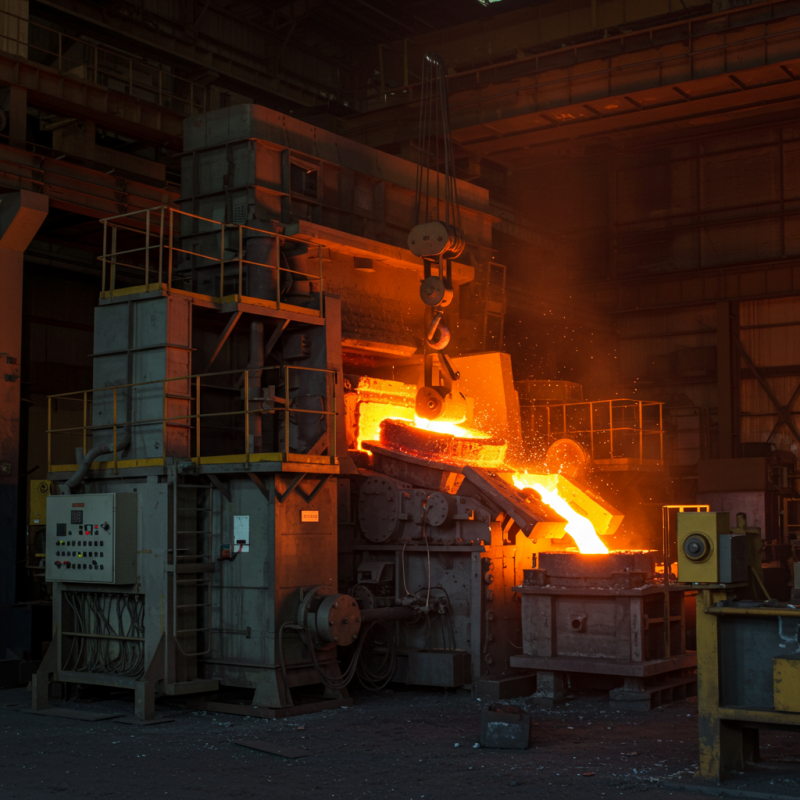
The coil generates an alternating electromagnetic field, which induces electrical currents inside the metal charge. These currents produce heat through electrical resistance, causing the metal to melt.
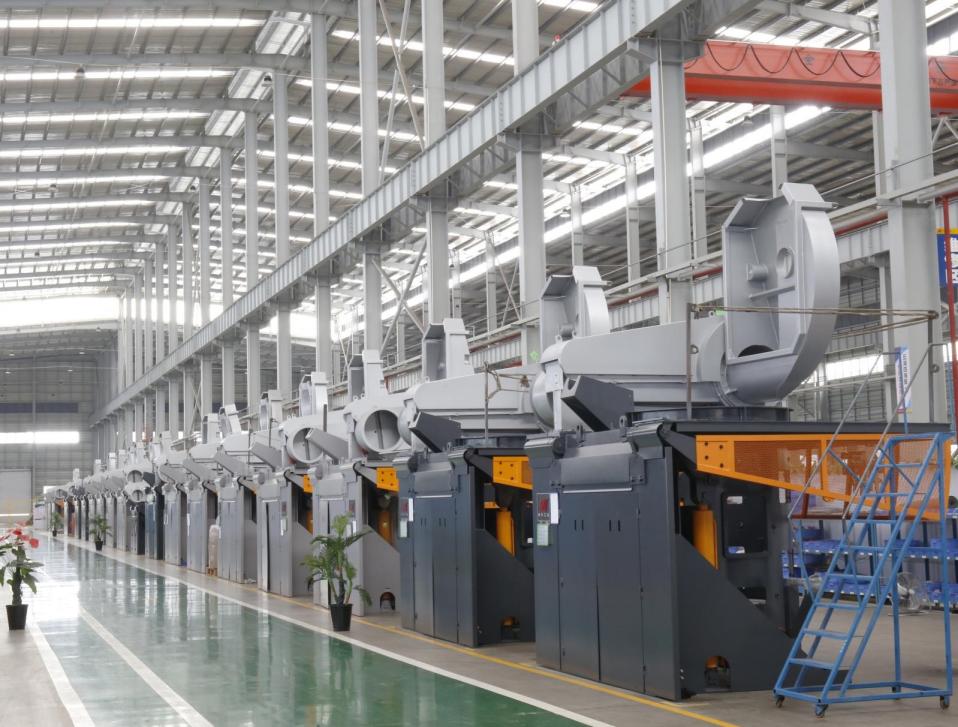
A typical medium-frequency induction melting system consists of:
- Medium-frequency power supply cabinet
- Induction furnace body
- Induction coil
- Cooling system
- Control system
- Hydraulic tilting system
- Electrical protection system
The power supply and furnace body must be properly matched to achieve the required operating performance.
2. How Does an Induction Furnace Power Supply Work?
The working principle of an induction furnace power supply involves several electrical conversion stages.
A typical medium-frequency power supply follows this process:
AC Input → Rectification → DC Link → Inversion → Medium-Frequency AC Output → Induction Coil → Electromagnetic Heating
Step 1: AC Input
The system receives electrical power from the factory’s electrical network.
The incoming voltage and frequency depend on the local power grid and the equipment configuration.
Step 2: Rectification
The rectifier converts incoming alternating current (AC) into direct current (DC).
Depending on the power supply design, different semiconductor components and rectification arrangements may be used.
Step 3: DC Link
The DC section provides the electrical connection between the rectifier and inverter.
It helps establish the electrical conditions required for the next conversion stage.
Step 4: Inversion
The inverter converts DC power into alternating current at the required medium frequency.
This is a key stage in the operation of an induction furnace power supply.
Step 5: Electromagnetic Heating
The medium-frequency current flows through the induction coil and generates an alternating magnetic field.
This field induces eddy currents in the metal charge, producing heat and gradually melting the material.
The complete process allows electrical energy to be transferred to the metal without direct contact between the heating element and the charge.
3. Main Components of an Induction Furnace Power Supply
A medium-frequency induction furnace power supply contains several important electrical and control components.
Rectifier
The rectifier converts incoming AC power into DC power.
Its configuration depends on the power supply technology and electrical design.
Inverter
The inverter converts DC power into medium-frequency AC power.
It is one of the most important sections affecting the output frequency and operating performance.
Capacitor Bank
Capacitors are used as part of the resonant circuit in many induction heating systems.
They help establish the electrical conditions required for efficient energy transfer.
Control System
The control system monitors and manages equipment operation.
Depending on the design, it may provide:
- Power adjustment
- Frequency control
- Operating status monitoring
- Fault detection
- Protection functions
- Operating parameter display
Cooling System
Power electronic components generate heat during operation.
A suitable cooling system helps maintain the required operating temperature and protect electrical components.
The cooling design may include water-cooled components, pumps, pipelines, heat exchangers, and monitoring devices.
4. What Is a Medium-Frequency Induction Furnace Power Supply?
A medium-frequency induction furnace power supply is designed to provide the frequency and power required for industrial metal melting applications.
It is commonly used in foundries and metal processing plants for melting materials such as:
- Cast iron
- Carbon steel
- Stainless steel
- Copper
- Aluminum
- Other metal alloys
The suitable frequency and power configuration depend on furnace capacity, metal type, charge characteristics, and production requirements.
Medium-frequency systems are widely used in industrial melting because they can provide a practical balance between electromagnetic penetration, stirring behavior, and melting performance.
5. IGBT vs. SCR Induction Furnace Power Supply
IGBT and SCR are two common semiconductor technologies used in induction furnace power supplies.
Both can be used in industrial induction melting systems, but their electrical configurations and operating characteristics are different.
IGBT Power Supply
IGBT stands for Insulated Gate Bipolar Transistor.
IGBT power supplies use transistor-based switching technology to convert electrical energy into medium-frequency output.
Common characteristics include:
- Flexible power control
- Medium-frequency output
- Compact system configurations in suitable designs
- Electronic control and protection functions
- Application in various industrial melting systems
SCR Power Supply
SCR stands for Silicon Controlled Rectifier.
SCR-based induction furnace power supplies use thyristor technology in their rectifier and inverter sections.
Common characteristics include:
- Established industrial technology
- Application in large-capacity melting systems
- Different circuit configurations according to power requirements
- Mature industrial operating experience
Key Differences
| Comparison | IGBT Power Supply | SCR Power Supply |
|---|---|---|
| Main semiconductor | IGBT | Thyristor |
| Electrical design | Transistor-based switching | Thyristor-based conversion |
| Control approach | Gate-controlled switching | Thyristor firing control |
| Application | Various medium-frequency systems | Various industrial melting systems |
| Selection | Depends on power and system design | Depends on power and system design |
Neither technology is automatically better for every project.
The correct choice depends on furnace capacity, rated power, electrical infrastructure, operating requirements, investment considerations, and the manufacturer’s engineering design.
6. How Does Power Supply Capacity Affect Melting Performance?
The rated power of an induction furnace power supply is closely related to the furnace’s melting performance.
In general, a suitable higher power configuration can support a higher melting rate, provided that the furnace, coil, cooling system, and electrical infrastructure are designed accordingly.
However, simply increasing power does not guarantee better overall performance.
Other factors include:
- Metal type
- Furnace capacity
- Initial charge temperature
- Charge material size
- Target melting temperature
- Refractory condition
- Operating schedule
- Power supply efficiency
When selecting a power supply, it is important to evaluate the complete melting system rather than considering rated power alone.
7. How to Choose the Right Induction Furnace Power Supply
Selecting a suitable power supply requires understanding the actual production requirements.
The following factors should be considered.
Furnace Capacity
The power supply should be matched to the furnace capacity and intended operating conditions.
Metal Type
Different metals have different melting temperatures and processing requirements.
A system designed for cast iron may have different power requirements from one designed for aluminum or copper.
Required Melting Rate
The target production rate is an important factor when determining the appropriate power configuration.
For example, a foundry requiring 30 tons of molten metal per day may need a different system configuration from a plant producing 100 tons per day.
Frequency
Operating frequency affects electromagnetic penetration and stirring characteristics.
The appropriate frequency should be selected according to the metal charge, furnace design, and melting process.
Electrical Infrastructure
The factory’s incoming electrical supply, transformer capacity, voltage conditions, and available installation space should all be evaluated.
Cooling Requirements
The power supply must operate within the cooling conditions specified by the manufacturer.
Future Expansion
If production is expected to increase, future requirements should be considered during the initial equipment design.
8. Common Problems with Induction Furnace Power Supplies
Power supply problems can affect melting performance and cause unexpected production interruptions.
Some common issues include:
Unstable Power Output
Possible causes include electrical supply fluctuations, component problems, loose connections, or control system faults.
Overheating
Overheating may be associated with insufficient cooling, abnormal operating conditions, or component deterioration.
Frequent Protection Alarms
Protection alarms may be triggered by electrical abnormalities, cooling conditions, or other system faults.
Inconsistent Melting Performance
This may result from power supply conditions, furnace configuration, charge material, or other operating factors.
Cooling System Problems
Insufficient water flow or abnormal water temperature may affect the operation of power electronic components.
When a fault occurs, operators should record the alarm information and follow the manufacturer’s troubleshooting procedures.
Electrical components should only be inspected or repaired by qualified personnel.
9. How to Maintain an Induction Furnace Power Supply
Regular maintenance helps support stable operation and reduce unnecessary downtime.
A maintenance program may include the following checks.
Electrical Inspection
- Inspect electrical connections.
- Check cabinet condition.
- Monitor operating parameters.
- Inspect relevant components according to the manufacturer’s schedule.
Cooling System Inspection
- Monitor water temperature.
- Check water flow and pressure.
- Inspect pumps and pipelines.
- Check for leakage.
- Maintain water quality according to system requirements.
Control System Inspection
- Check sensors and monitoring devices.
- Review alarm records.
- Verify protection functions.
- Keep operating records.
General Maintenance
- Keep the electrical cabinet clean and dry.
- Ensure adequate ventilation where required.
- Follow the manufacturer’s maintenance schedule.
- Replace components only with approved parts and procedures.
10. Why the Power Supply and Furnace Should Be Designed Together
An induction furnace power supply should not be selected independently of the furnace body.
The two systems must be matched to achieve suitable electrical and thermal performance.
For example, the following components should be considered together:
- Furnace capacity
- Induction coil design
- Rated power
- Operating frequency
- Resonant circuit
- Cooling system
- Control system
- Electrical protection
If the power supply and furnace are not properly matched, the system may fail to achieve the intended operating performance.
An integrated engineering approach helps ensure that the main components work together according to the project’s requirements.
11. Rongke Medium-Frequency Induction Furnace Power Supply Solutions
Rongke provides medium-frequency induction melting solutions for industrial foundries and metal processing plants.
Depending on project requirements, the power supply system can be configured according to:
- Furnace capacity
- Metal type
- Required melting rate
- Rated power
- Operating frequency
- Electrical infrastructure
- Cooling requirements
- Production automation
Rongke’s induction melting solutions can also be integrated with automatic batching and feeding, molten metal transfer, and automatic pouring systems.
This allows customers to consider the power supply as part of a complete melting and foundry production solution.
Conclusion
The induction furnace power supply plays a central role in the performance of an induction melting system.
It converts incoming electrical energy into the medium-frequency power required for electromagnetic heating.
When selecting a suitable power supply, foundries should consider:
- Furnace capacity
- Rated power
- Metal type
- Melting rate
- Operating frequency
- IGBT or SCR technology
- Cooling requirements
- Electrical infrastructure
- Maintenance and service support
Choosing a properly matched power supply can help support stable melting performance and reliable foundry operation.
Looking for a suitable induction furnace power supply?
Contact Rongke with your metal type, furnace capacity, required production rate, and electrical requirements. Our team can help evaluate a suitable medium-frequency induction melting solution.