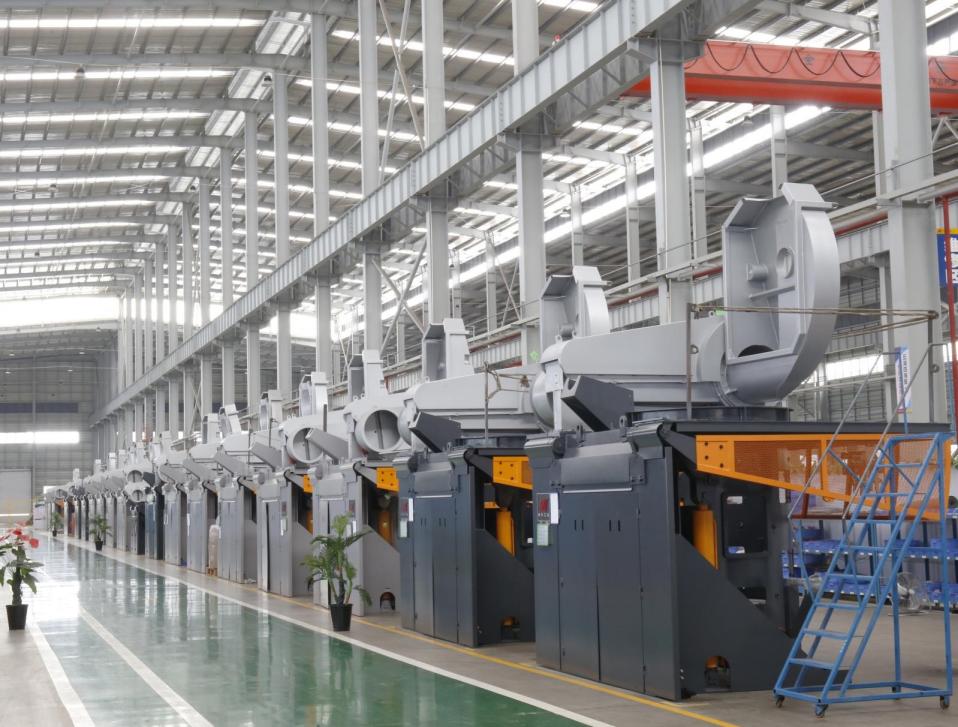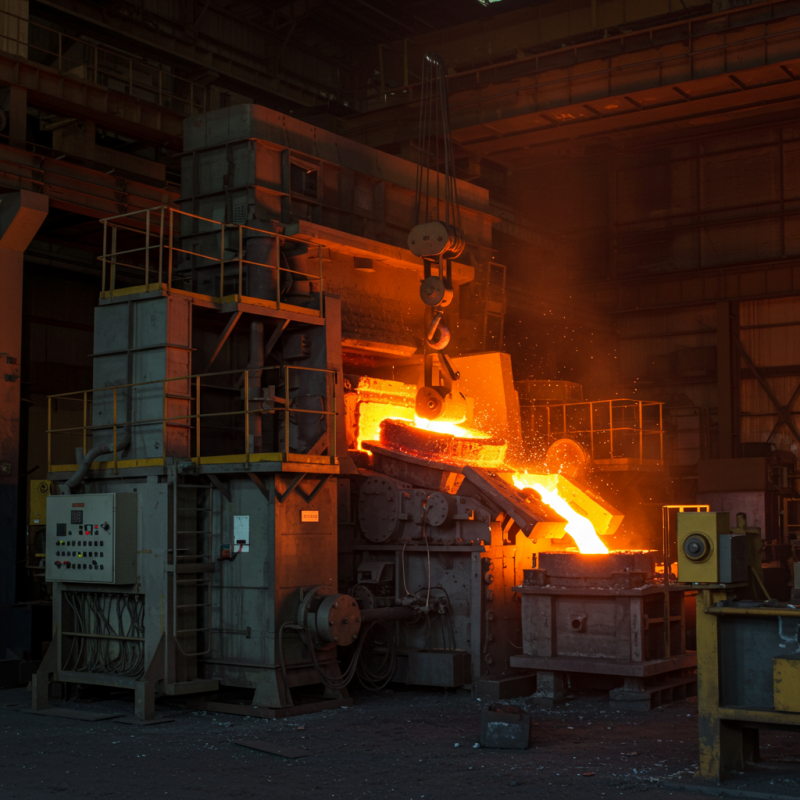


How to Improve the Efficiency of an Induction Melting Furnace
How to Improve the Efficiency of an Induction Melting Furnace
Induction melting furnaces are widely used in foundries and metal processing plants because they offer fast heating, precise temperature control, and flexible operation.
However, the overall efficiency of an induction melting system depends on more than the furnace itself. Power supply performance, charge material preparation, refractory condition, cooling systems, operating procedures, and material handling can all influence melting efficiency and production costs.
For foundries, improving induction melting furnace efficiency can help reduce unnecessary energy consumption, increase production consistency, and make better use of installed equipment.
In this guide, we explain practical ways to improve induction melting furnace efficiency and identify the key factors that affect energy consumption and production performance.
1. Understand What Induction Furnace Efficiency Means
Before improving efficiency, it is important to understand what you want to measure.
Induction melting furnace efficiency can refer to several different aspects of operation.
Electrical Efficiency
Electrical efficiency describes how effectively electrical energy is converted into useful heating energy.
It is affected by the power supply, induction coil, furnace design, and operating conditions.
Melting Efficiency
Melting efficiency relates to how effectively the furnace converts electrical energy into the required amount of molten metal.
It may be evaluated alongside energy consumption per ton and melting time.
Production Efficiency
Production efficiency considers how much metal the system can produce over a specific period.
It can be affected by charging time, melting time, temperature adjustment, tapping, downtime, and material handling.
These measurements are related, but they are not interchangeable. A furnace with good electrical performance may still deliver poor overall production efficiency if charging, tapping, or downstream processes cause delays.
2. Optimize Power Supply Settings
The medium-frequency power supply is a key component of an induction melting furnace.
It converts incoming electrical power into the power required to generate the electromagnetic field that heats the metal charge.
Incorrect operating parameters or unsuitable equipment configuration can affect melting performance.
Practical Recommendations
- Operate the furnace within the manufacturer’s recommended parameters.
- Monitor actual power output and melting time.
- Check electrical connections regularly.
- Investigate unexpected power fluctuations.
- Ensure the power supply is appropriately matched to the furnace.
- Maintain the electrical system according to the manufacturer’s instructions.
The objective is not simply to use the highest possible power setting. The power configuration should match the metal type, furnace capacity, charge material, and required production rate.
3. Choose the Right Furnace Capacity
Furnace capacity can have a significant impact on production efficiency.
A furnace that is too small may struggle to meet production targets, while an unnecessarily large furnace may increase capital investment and create operating inefficiencies under certain production conditions.
How to Select the Right Capacity
When selecting a furnace, consider:
- Required tons of molten metal per day
- Target production rate in tons per hour
- Metal type
- Available operating hours
- Melting cycle time
- Number of heats required
- Future production plans
For example, a foundry that needs 40 tons of molten metal per day and operates for eight effective hours needs an average production rate of approximately 5 tons per hour.
The final furnace configuration must also account for actual melting performance, charging, tapping, downtime, and production scheduling.
Correct sizing helps align equipment capability with real production requirements.
4. Improve Charge Material Preparation
Charge material preparation can affect melting speed, energy consumption, and operating consistency.
Poorly prepared materials may cause charging delays, inconsistent melting conditions, or additional processing requirements.
Recommended Practices
- Sort materials according to metal type and grade.
- Remove unsuitable contaminants.
- Use a consistent charge preparation process.
- Ensure materials are suitable for the furnace and melting procedure.
- Follow appropriate safety procedures for handling and charging materials.
- Avoid introducing wet or otherwise unsafe materials into the furnace.
Charge material size and arrangement should also be compatible with the furnace design and charging system.
Good material preparation helps the furnace operate more consistently and reduces avoidable interruptions.
5. Maintain the Refractory Lining
The refractory lining protects the furnace structure from molten metal and high temperatures.
Its condition can influence heat retention, operating reliability, and furnace availability.
Factors That Affect Refractory Performance
- Refractory material selection
- Installation quality
- Sintering procedure
- Operating temperature
- Thermal cycling
- Slag chemistry
- Mechanical impact during charging
- Maintenance practices
How to Improve Refractory Service Life
Select refractory materials suitable for the metal being melted and the intended operating conditions.
Follow the refractory supplier’s installation and sintering procedures, and inspect the lining according to the equipment manufacturer’s recommendations.
A damaged lining should not be ignored in an attempt to maintain production. Refractory condition is a critical operational safety issue.
6. Control Melting and Holding Temperature
Temperature management affects energy consumption, metal quality, and refractory wear.
Heating metal beyond the temperature required by the production process may consume additional energy without improving the final product.
At the same time, insufficient temperature may cause problems during subsequent metal transfer and pouring.
Practical Recommendations
- Define suitable target temperatures for each process.
- Verify temperature measurement equipment.
- Avoid unnecessary holding at elevated temperatures.
- Coordinate melting schedules with downstream production.
- Minimize avoidable delays between melting and pouring.
- Follow the required temperature specifications for the metal and casting process.
Temperature targets should always be determined by the specific alloy and production requirements rather than by a universal setting.
7. Maintain the Cooling System
The cooling system helps protect the induction coil, power supply, and other components that require controlled cooling.
Poor cooling conditions may trigger alarms, restrict equipment operation, or cause unplanned shutdowns.
Key Maintenance Points
- Monitor cooling water temperature and flow.
- Check pumps and pipelines.
- Inspect heat exchangers.
- Monitor water quality according to system requirements.
- Investigate leaks or abnormal pressure.
- Respond promptly to cooling alarms.
A properly maintained cooling system supports reliable furnace operation and helps avoid interruptions caused by overheating.
Cooling requirements vary by equipment design, so maintenance should follow the manufacturer’s specifications.
8. Reduce Unnecessary Melting Downtime
Melting time is only one part of the complete production cycle.
Charging, temperature adjustment, slag removal, tapping, and preparation for the next heat also consume time.
Reducing avoidable delays can improve daily production without necessarily increasing installed power.
Practical Ways to Improve Production Flow
- Prepare charge materials before the furnace needs them.
- Coordinate charging and tapping activities.
- Standardize operating procedures.
- Train operators on the specific equipment.
- Schedule maintenance to reduce unexpected downtime.
- Record cycle times and investigate recurring delays.
A consistent production schedule helps the foundry identify where time is being lost and where improvements will have the greatest impact.
9. Improve Automatic Batching and Feeding
Manual material preparation and charging may introduce delays or inconsistencies, depending on the production process.
An automatic batching and feeding system can help coordinate material preparation and supply.
Potential benefits include:
- More consistent charge preparation
- Reduced manual handling
- Improved production coordination
- Better integration with the melting process
- More predictable material supply
Automation does not automatically guarantee lower energy consumption. Its value depends on the existing workflow, equipment configuration, and production requirements.
However, when material supply is a bottleneck, a well-designed automatic feeding system can help the furnace operate more consistently.
10. Coordinate Molten Metal Transfer and Automatic Pouring
The melting furnace is only one part of the foundry production process.
After melting, molten metal may need to be transferred, distributed, and poured into molds.
If the downstream equipment cannot keep up with the melting rate, the furnace may experience unnecessary delays or the production line may become unbalanced.
A coordinated process may include:
Raw Material Batching → Automatic Feeding → Induction Melting → Molten Metal Transfer → Automatic Pouring
When planning automation, evaluate the capacity and timing of each stage.
The goal is to ensure that melting, transfer, and pouring work together according to the production schedule.
11. Monitor Energy Consumption per Ton
One useful way to evaluate melting performance is to track electrical energy consumption per ton of metal produced.
A basic calculation is:
Energy Consumption per Ton = Total Electrical Energy Consumed ÷ Tons of Metal Produced
For example, if a melting operation consumes 3,000 kWh of electricity to produce 10 tons of metal:
3,000 kWh ÷ 10 tons = 300 kWh/ton
This is an illustrative calculation, not a benchmark for every furnace. Actual consumption varies with metal type, initial material temperature, target temperature, furnace design, power configuration, operating conditions, and how the measurement boundary is defined.
For meaningful comparisons, use consistent measurement methods and compare similar operating conditions.
Track energy consumption alongside melting time, production output, and downtime rather than relying on a single number.
12. Use Operating Data to Identify Inefficiencies
Production records can help identify opportunities for improvement.
Useful data may include:
- Electricity consumption
- Tons melted per shift
- Melting time per heat
- Charge weight
- Metal temperature
- Downtime
- Cooling alarms
- Refractory service life
- Production interruptions
For example, if energy consumption per ton rises over several weeks, the maintenance team can investigate whether the change is associated with charge material, operating practices, equipment condition, or production scheduling.
Consistent records make it easier to distinguish recurring problems from temporary variations.
13. Avoid Common Mistakes That Reduce Efficiency
Several operating practices can undermine furnace performance.
Mistake 1: Selecting Equipment Only by Nominal Capacity
Furnace tonnage alone does not determine production output. Melting rate, cycle time, and operating schedule also matter.
Mistake 2: Ignoring Charge Preparation
Poorly prepared charge materials can introduce unnecessary delays and inconsistent operating conditions.
Mistake 3: Overheating Metal Without a Process Requirement
Excessive temperatures may increase energy consumption and refractory wear.
Mistake 4: Neglecting Preventive Maintenance
Cooling, electrical, and refractory problems can affect reliability and production continuity.
Mistake 5: Ignoring Downstream Bottlenecks
A furnace cannot deliver the expected overall production output if charging, transfer, or pouring cannot keep up.
Mistake 6: Comparing Energy Data Under Different Conditions
Energy figures are meaningful only when the metal, temperature requirements, production conditions, and measurement methods are sufficiently comparable.
14. How Rongke Can Help Improve Melting Efficiency
Improving induction melting furnace efficiency requires a system-level approach.
The furnace, medium-frequency power supply, cooling system, charging equipment, and downstream handling systems should be considered together.
Rongke provides induction melting and foundry automation solutions that can be configured according to different production requirements.
Depending on the project, a solution may include:
- Medium-frequency induction melting furnaces
- IGBT or SCR power supply systems
- Cooling systems
- Automatic batching and feeding systems
- Molten metal transfer systems
- Automatic pouring systems
The appropriate configuration depends on the customer’s metal type, production target, furnace capacity, factory layout, and automation requirements.
Conclusion
Improving induction melting furnace efficiency is not simply a matter of increasing power.
It requires attention to furnace sizing, power supply settings, charge preparation, refractory condition, temperature control, cooling, maintenance, and production coordination.
Foundries should monitor both energy consumption per ton and actual production output to identify the most effective improvements.
A properly configured and maintained melting system can help reduce avoidable downtime, improve production consistency, and support more efficient foundry operations.
Looking to improve your induction melting process?
Contact Rongke with your metal type, required production capacity, working hours, and current furnace configuration. Our team can help evaluate a suitable induction melting and foundry automation solution.