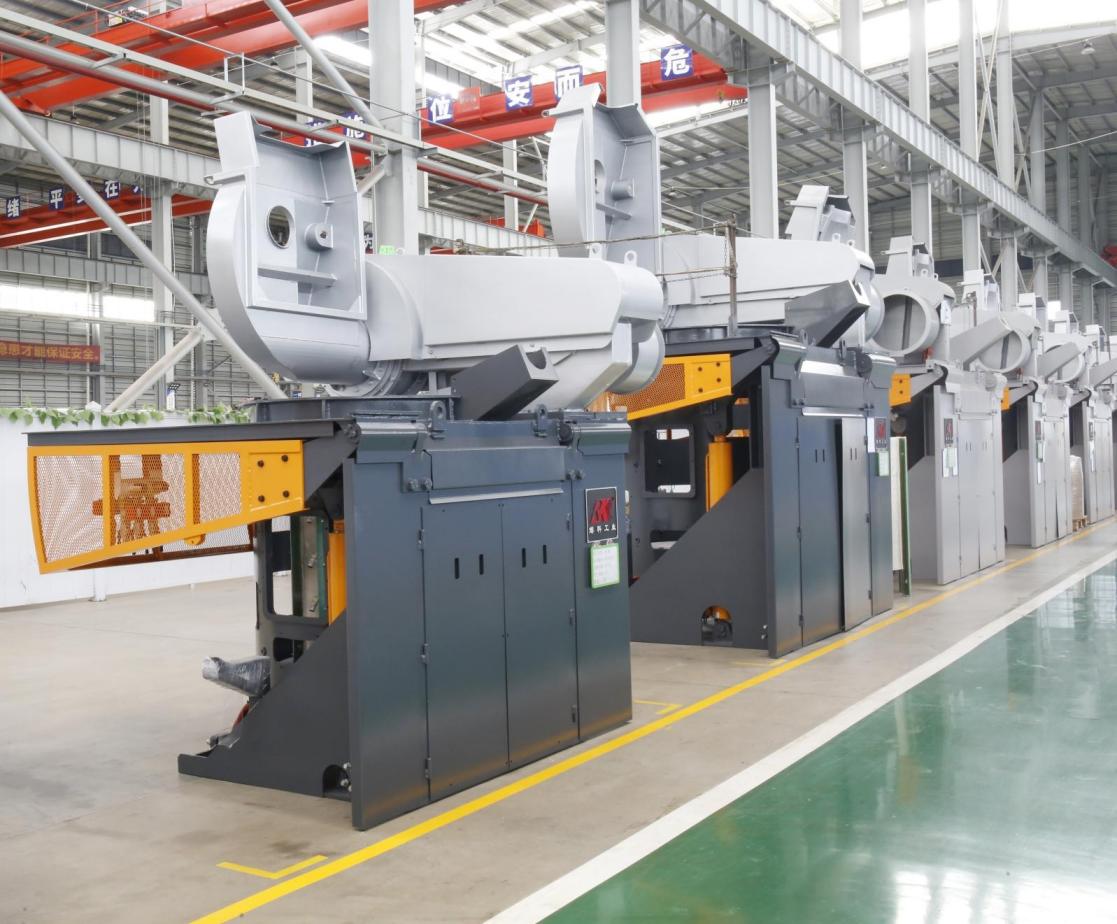


How to Calculate the Capacity of an Induction Melting Furnace
How to Calculate the Capacity of an Induction Melting Furnace
Selecting the right capacity is one of the most important decisions when purchasing an induction melting furnace.
A furnace that is too small may not meet the required production output, while a furnace that is unnecessarily large can increase equipment investment, power requirements, and operating costs.
However, furnace capacity is not simply the same as daily production output.
When selecting an induction melting furnace, foundries should consider several factors, including furnace capacity, melting rate, melting time, production schedule, metal type, power supply, and the number of heats required per day.
This guide explains how to calculate induction furnace capacity and how to choose a suitable furnace size for your production requirements.
1. What Does Induction Furnace Capacity Mean?
Induction furnace capacity usually refers to the maximum amount of molten metal that the furnace can hold or melt in one heat.
For example, an induction melting furnace may have a nominal capacity of:
- 0.5 ton
- 1 ton
- 2 tons
- 3 tons
- 5 tons
- 10 tons
- 20 tons
- 30 tons
- 50 tons
- 100 tons
The exact available capacity depends on the furnace design, metal type, operating requirements, and manufacturer.
However, a 5-ton induction furnace does not necessarily produce only 5 tons of metal per hour or per day.
This distinction is important.
A furnace’s capacity describes the amount of metal handled in a heat, while production capacity depends on how quickly the furnace can melt, how long each heat takes, and how many heats can be completed during the working day.
2. Furnace Capacity vs. Production Capacity
These two terms are often confused.
Furnace Capacity
Furnace capacity is generally expressed in tons per heat.
For example:
5-ton furnace = approximately 5 tons nominal furnace capacity per heat
Production Capacity
Production capacity refers to how much molten metal the system can produce over a specific period.
It may be expressed as:
- tons per hour
- tons per shift
- tons per day
- tons per month
For example, a 5-ton furnace could potentially produce significantly more than 5 tons during a working day if multiple melting cycles are completed.
Therefore, when choosing an induction melting furnace, you should not simply tell the manufacturer:
“I need a 10-ton furnace.”
Instead, it is better to provide your actual production target.
For example:
“We need to melt approximately 60 tons of cast iron per day.”
This information allows the furnace manufacturer to calculate a more appropriate system configuration.
3. The Basic Formula for Calculating Furnace Requirements
A simple way to estimate the required furnace capacity is:
Required Production = Furnace Capacity × Number of Heats
For example, if a furnace has a nominal capacity of 5 tons and the foundry completes 10 heats per day:
5 tons × 10 heats = 50 tons/day
However, actual production will depend on the effective charge weight, melting time, slag removal, temperature adjustment, tapping, loading, and other operating processes.
Therefore, a more practical calculation should also consider the total cycle time.
4. Calculate Production Based on Melting Cycle Time
The number of heats that can be completed depends heavily on the furnace cycle time.
A simplified formula is:
Heats per Hour = 60 ÷ Furnace Cycle Time (minutes)
For example, if one complete melting cycle takes approximately 60 minutes:
60 ÷ 60 = 1 heat/hour
For a 5-ton furnace:
5 tons × 1 heat/hour = approximately 5 tons/hour
If the furnace operates for 10 effective hours:
5 tons × 10 hours = approximately 50 tons/day
This is a simplified calculation.
Actual production should account for charging, melting, temperature adjustment, slag removal, tapping, furnace preparation, maintenance, and other operational downtime.
5. Melting Rate Is Also Important
The melting rate describes how quickly the furnace can melt metal.
It is often expressed as:
tons per hour (t/h)
For example:
- Furnace capacity: 5 tons
- Melting rate: 5 t/h
- Approximate melting time: 60 minutes
Another furnace may have the same nominal capacity but a different power configuration and therefore a different melting performance.
This is why comparing furnaces based only on nominal capacity is not enough.
When evaluating equipment, ask the manufacturer about:
- Furnace capacity
- Rated power
- Melting rate
- Specific power consumption
- Melting time
- Metal type
- Operating temperature
- Recommended charge material
These parameters provide a much better understanding of actual production capability.
6. How Metal Type Affects Furnace Capacity
Different metals require different melting conditions.
For example, cast iron, steel, aluminum, and copper have different melting temperatures, physical properties, and processing requirements.
A furnace designed for cast iron melting may have different operating requirements from one designed primarily for steel or non-ferrous metals.
Important considerations include:
Cast Iron
Cast iron is widely processed using induction melting furnaces in foundries.
The system needs to support appropriate melting temperatures, chemical composition control, refractory selection, and production requirements.
Steel
Steel generally requires higher melting temperatures and may require different refractory and power configurations.
Aluminum
Aluminum has a lower melting temperature, and furnace design may focus on oxidation control, temperature management, and material handling.
Copper and Copper Alloys
Copper melting requires appropriate furnace materials, temperature control, and power configuration depending on the alloy and production process.
Therefore, the same furnace capacity does not necessarily mean the same production performance for every metal.
7. How to Calculate the Right Furnace Size
A practical selection process can start with your required daily production.
For example, suppose a foundry needs:
50 tons of molten metal per day
and plans to operate:
10 effective production hours per day
The required average production rate would be:
50 ÷ 10 = 5 tons/hour
If the selected furnace can achieve approximately 5 tons per hour under the specified operating conditions, a furnace configuration around this production requirement may be considered.
However, the final furnace capacity should also consider:
- Production peaks
- Number of furnaces
- Heat cycle time
- Charging method
- Pouring requirements
- Metal temperature
- Working hours
- Maintenance time
- Future production expansion
This is why furnace selection should be based on the complete production process rather than one number.
8. One Large Furnace or Multiple Smaller Furnaces?
For larger foundries, another important question is whether to install one large furnace or several smaller furnaces.
For example, a foundry requiring 20 tons of molten metal per hour might consider:
Option A: One large furnace
or
Option B: Two or more smaller furnaces
Both configurations can have different operational characteristics.
Multiple furnaces may provide greater flexibility for:
- Different alloys
- Different production lines
- Continuous production
- Maintenance planning
- Production scheduling
- Backup capacity
On the other hand, a larger furnace may be appropriate for certain high-volume production processes.
The optimal configuration depends on the factory layout, production process, metal types, automation requirements, and investment plan.
9. Don’t Ignore Furnace Power
Furnace capacity and electrical power are closely related, but they are not the same parameter.
For an induction melting furnace, the power supply provides the electrical energy required to generate the electromagnetic field that heats the metal.
A higher power configuration can generally support a higher melting rate, depending on the furnace design and operating conditions.
When evaluating a furnace, consider:
- Furnace capacity
- Rated power
- Power-to-capacity ratio
- Melting rate
- Power supply type
- Frequency
- Cooling system
- Electrical infrastructure
For medium-frequency induction melting systems, the power supply and furnace should be designed as an integrated system.
10. Consider the Actual Charge Weight
Nominal furnace capacity does not always mean that every heat will use exactly the same charge weight.
Actual charge weight may vary depending on:
- Metal density
- Charge material size
- Scrap type
- Return material
- Alloy additions
- Operating level
- Slag generation
- Required molten metal quantity
For example, a furnace rated at 5 tons may not be operated with exactly 5 tons in every cycle.
The actual charge plan should be determined according to the furnace design and production process.
11. Consider Your Future Production Requirements
A furnace should not necessarily be selected only according to today’s production volume.
If your foundry expects production to increase significantly in the future, it may be useful to consider future requirements during the initial system design.
For example:
Current production: 30 tons/day
Expected future production: 50 tons/day
The furnace system can potentially be designed with future production requirements in mind.
However, oversizing equipment unnecessarily can also increase initial investment and operating requirements.
The goal is to find a reasonable balance between:
Current production + Future expansion + Investment efficiency
12. Automation Can Affect Overall Production Capacity
The melting furnace is only one part of a modern foundry melting system.
Production efficiency can also be affected by material handling and molten metal logistics.
A typical automated process may include:
Raw Material Batching → Automatic Feeding → Induction Melting → Molten Metal Transfer → Automatic Pouring
If the furnace melts metal faster than the feeding system can supply material, the furnace may not achieve its potential production rate.
Similarly, if the pouring or molten metal transfer system cannot keep up with melting production, the overall production line may become a bottleneck.
Therefore, furnace capacity should be evaluated together with the complete foundry production system.
13. What Information Should You Give a Furnace Manufacturer?
When requesting an induction melting furnace quotation, providing detailed production information can significantly improve the accuracy of the proposed solution.
We recommend preparing the following information:
Metal Information
- Metal type
- Alloy grade
- Charge material
- Target melting temperature
Production Information
- Required production per day
- Required production per hour
- Working hours per day
- Number of shifts
- Expected future production
Furnace Requirements
- Preferred furnace capacity
- Melting rate
- Power supply requirements
- Manual or automatic operation
- Number of furnaces
Factory Information
- Available installation space
- Electrical power conditions
- Cooling water conditions
- Material handling requirements
- Existing pouring system
The more complete the information, the easier it is for the manufacturer to design an appropriate system.
14. Example: Selecting a Furnace for a Foundry
Suppose a foundry produces cast iron components and requires:
- 40 tons/day production
- 8 effective melting hours/day
- Cast iron as the main material
- Automatic material feeding
- Automated molten metal handling
The average production requirement is:
40 ÷ 8 = 5 tons/hour
The next step is not simply to purchase a 5-ton furnace.
The engineering team should evaluate:
- Required furnace capacity
- Melting rate
- Power supply
- Heat cycle time
- Charging system
- Molten metal transfer
- Pouring requirements
- Number of furnaces
- Factory layout
Based on these parameters, the manufacturer can develop a complete furnace configuration rather than selecting equipment based on capacity alone.
15. Common Mistakes When Selecting Furnace Capacity
Mistake 1: Choosing a Furnace Only by Tonnes
A 10-ton furnace does not automatically mean 10 tons/hour production.
Always check melting rate and cycle time.
Mistake 2: Ignoring Metal Type
Different metals have different melting requirements.
The same furnace configuration may not provide the same performance for different materials.
Mistake 3: Ignoring Production Schedule
Daily production depends on working hours, number of heats, and downtime.
Mistake 4: Ignoring Future Expansion
A system designed only for today’s production may become insufficient when production increases.
Mistake 5: Looking Only at Furnace Price
The complete system may include:
- Furnace body
- Medium-frequency power supply
- Cooling system
- Hydraulic tilting system
- Control system
- Charging system
- Temperature measurement
- Molten metal transfer
- Automatic pouring
- Safety systems
Therefore, comparing complete system configurations is more meaningful than comparing furnace prices alone.
16. How Rongke Can Help
Choosing the correct induction furnace capacity requires more than selecting a number from a product catalog.
At Rongke, furnace systems can be designed according to the customer’s:
- Metal type
- Production capacity
- Furnace capacity
- Melting rate
- Power requirements
- Automation requirements
- Factory layout
- Future expansion plans
Our solutions can also integrate induction melting with automated batching and feeding, molten iron transfer, and automatic pouring systems.
This allows the melting process to be considered as part of the complete foundry production line.
Conclusion
Calculating the right induction furnace capacity requires looking beyond the nominal furnace tonnage.
The most important factors include:
- Required production volume
- Furnace capacity
- Melting rate
- Heat cycle time
- Working hours
- Metal type
- Power supply
- Number of furnaces
- Automation requirements
- Future production plans
A properly sized induction melting furnace can help your foundry achieve the required production output while maintaining efficient operation and flexibility.
If you are planning a new foundry or upgrading an existing melting system, providing your metal type, required production, working hours, and automation requirements will help engineers develop a more suitable furnace configuration.
Contact Rongke to discuss your induction melting furnace requirements.